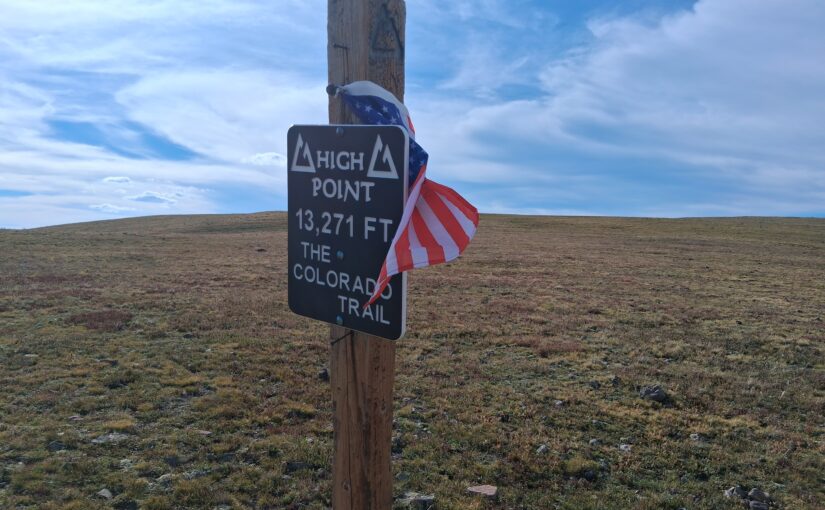
Three days and 54 miles in the wilderness alone
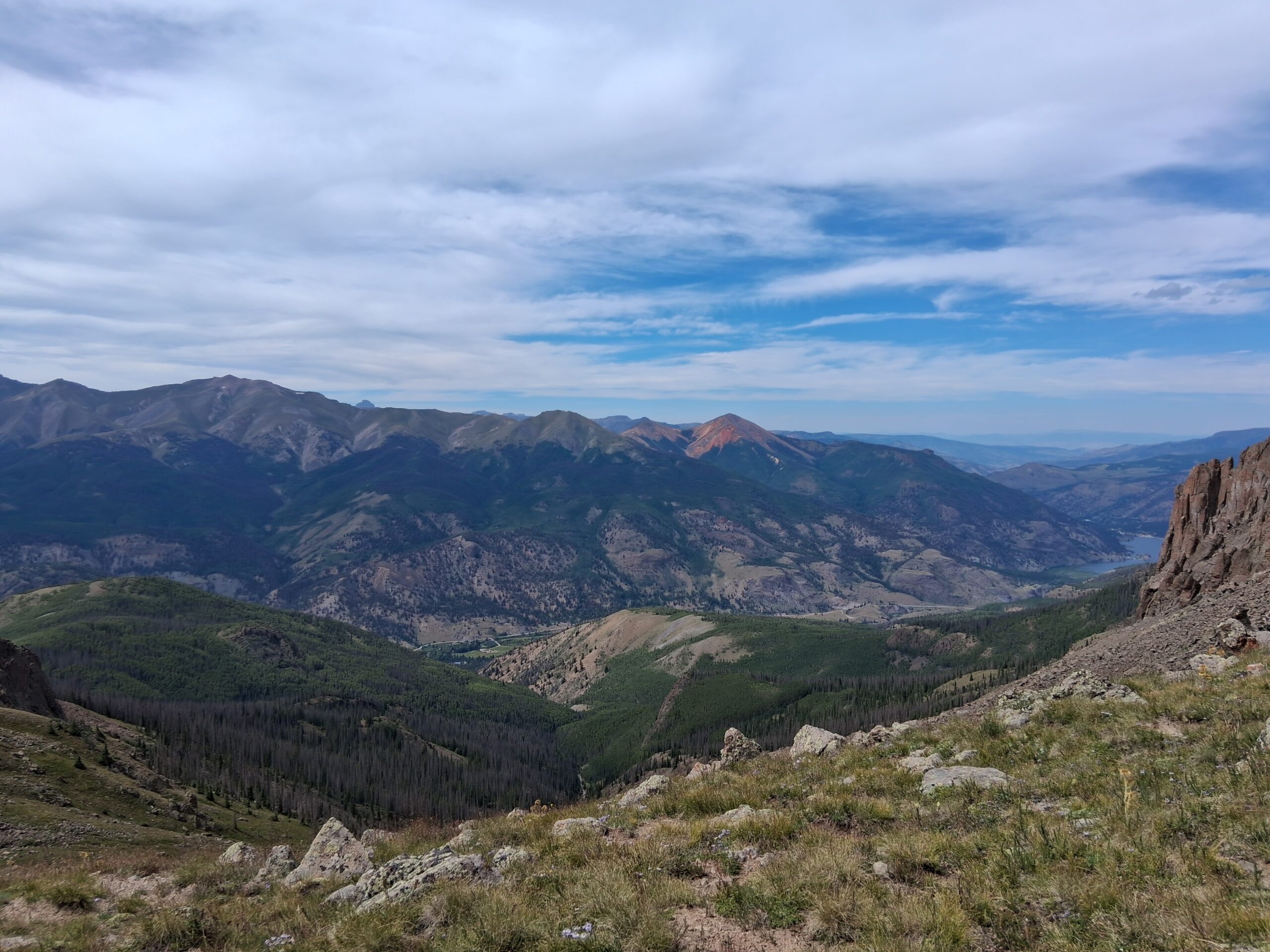
This is a recap of my fifth annual solo backpacking adventure on the Colorado Trail.1 This year’s trek covered Segments 22-24, effectively from Lake City to Silverton, and some of the most spectacular landscapes of the trail. No photos do it justice, so I barely took any! I planned to finish the Colorado Trail and hike all the way to Durango this year, but had to bail about 74 miles early due to some stupid foot and shoe issues that were entirely avoidable. I was bummed to cut it short, but still grateful for the time I did get to spend on the amazing Colorado Trail.
This article is organized in four sections: (1) hike recap, (2) lessons learned, (3) nutrition, and (4) gear list.
Hike Recap
This year I picked up where I left off in 2023. I started at Spring Creek Pass, which is about a 30-minute drive from Lake City, which is about an hour’s drive from Gunnison, which is about a 3.5-hour drive from my house. I rented a car, left my house at 4:30am to drive to Gunnison, and dropped off the car at the Gunnison Airport. From there, I got a ride from a Colorado Trail volunteer shuttler down to Lake City. I then hitchhiked from Lake City up to Spring Creek Pass and was on the trail by 10am.
I planned and packed to hike 128.6 miles over seven days, from Spring Creek Pass to the Durango terminus, but I only made it 54 miles in three days. I cut it short because my feet were killing me. My feet were killing me because I made the stupid decision to get new trail shoes the day before the hike. The shoes turned out to be a terrible fit. I’d been wearing the same pair of Altra Superior 5 trail running shoes for the past few years with really no issues. The tread was worn down pretty badly though, and I was concerned they’d blow out on the trail. In the past, I’ve replaced these shoes (with the same model) without needing to break them in again. This time, I bought the latest model (Superior 7) and figured I would not need to break those in either. I was wrong.
On Day 1, within the first hour on the trail, I could feel the shoes jabbing into my heel and ankle. I kept going, hoping they’d break in and relax. They didn’t. I quickly developed blisters, hot spots, and problems on each foot. My left foot – which has been problematic since I suffered a stress fracture, collapsed arch, and posterior tibial tendonitis more than a decade ago – felt cramped in the toe box and structurally compromised. On the right side, the outer portion of the shoe jabbed into my ankle making each step mildly, but increasingly painful. Both feet quickly developed blisters by the end of Day 1.
Nevertheless, I went pretty hard on Day 1, hiking 19 miles with some tough climbing at high altitude: elevation gain of approximately 3,800 feet; from 11,000 feet up to 13,000 feet. This segment was very exposed, but thankfully the weather cooperated and I was able to hike until about 7pm, when I stopped and set up camp at a beautiful spot overlooking a valley, about 1.7 miles in to Segment 23. After eating dinner and dressing my open blisters, I was in bed by 8pm.
Day 2 featured majestic landscapes, tough climbing, some wild weather, and continued foot problems. I got a nice early start in the morning, and was on the trail by about 6:45am. I hiked a total of 17.4 miles, with about 3,500 feet of elevation gain, all above 12,000 feet. Much of this section was exposed, and various storms swirled around the area in the early afternoon. I saw some rain, hail, and wind, with scattered thunder. Nothing too crazy, but enough to get the heart pumping and run down a ridge or two. Thankfully the weather cleared up and I hiked until about 4pm. I was exhausted, and stressed about my feet, which were becoming more painful. I set up my tent at another beautiful campsite, overlooking a small lake at about mile 3 of Segment 24.
I hit the trail at about 6:45am on Day 3, and hiked the remaining 18 miles of Segment 24. My foot problems were clearly getting worse, so I decided to hitch a ride into the town of Silverton to replenish my first-aid kit and supplies. I was running out of bandages and antibiotic ointment for my open blisters. It was late in the afternoon when I got into town, so I decided to find a motel, clean up, and take a sober assessment of my situation. It soon became clear that I needed to call it. I could feel my left foot getting overworked, and I felt that if I kept going I may be left with another collapsed arch and the injuries I suffered more than a decade ago. In my younger years I would’ve (stupidly) convinced myself to keep going. Not this time. It wasn’t worth it. It was time to go home and live to hike another day.
I spent my last night of this adventure in a Silverton motel room, where I showered up, and proceeded to eat two chicken sandwiches, two fruit bowls, and a cheese pizza before hitting the hay. The next morning, I hitched from Silverton to the Durango transit center, about an hour’s drive. I then got a ride to the Durango airport from a Colorado Trail volunteer shuttler, and caught a flight from Durango back to Denver.
Lessons Learned
The painfully obvious lesson here is don’t break in new gear (shoes in this case) out on the trail. I need to figure out a better shoe option for next year. On top of that, I need to take the time to thoughtfully build out and maintain my first-aid kit. I’ve had the same one for years and never pay much attention to it, other than making sure I have it stocked with bandaids. Before my next adventure I’ll strategically fine-tune my first-aid kit. A handful of additional notes for next time: (1) sleeping bag is probably on its last legs, consider replacing; (2) water filter is extremely slow, consider replacing; (3) rain shell isn’t very water resistant any more, consider replacing; and (4) refresh nutrition strategy, which I speak to next.
Nutrition
My food consisted of bison heart pemmican (homemade!), beef and venison jerky bars, tuna packs, almond and peanut butter, GoMacro bars, Lara bars, tortillas, dried mango and figs, and trail mix. The elevation zapped much of my appetite for most of the trek, and I really had to force myself to choke down the calories, especially the tuna for breakfast, which seemed like a reasonable choice at the time. I barely touched the jars of peanut and almond butter that I packed, and as much as I tried to convince myself that my hand-crafted pemmican tasted good, it didn’t. I need to explore other no-cook alternatives that are more appetizing and simpler to prepare and pack. I’ve never done cold-soak meals, but they seem like a good option.
Gear List
My packing system and gear is pretty solid and dialed in at this point. I use dry compression bags and organize the gear below as follows: sleeping bag in 6L dry bag; clothes in 12L dry bag; daily food in 1L Ziploc bag; incidentals in 2L dry bag; food in Ursack bear bag; CCF sleeping pad strapped to outside of backpack. The only change to this I’d make next time is to pack my re-charged first-aid supplies in a dry bag for easy access.
Here’s my complete gear list.
- Backpack
- Sleeping bag (might be on its way out)
- Insulating sleeping pad
- Tent
- Tent stakes (10x + 1 extra)
- 1L Hydroflask bottles (2x)
- Hiking pants
- Wool long sleeve shirt
- Champion fleece
- Patagonia down puffer jacket
- Extra wool base layer
- Inji trail running socks
- Smartwool hiking socks
- Extra pair of heavy warm socks for bed time
- Warm Phoenix Suns beanie
- Quick-dry towel
- Toothbrush
- Altra trail running shoes (never again!)
- Luna sandals (replacing with Bedrock Carin EVO Pro sandals)
- Hat for sun protection
- Play Golden Buff for additional sun protection
- Trekking poles
- Headlamp with spare batteries
- North Face Rain Shell
- Gloves (light)
- Water filtration system (Sawyer Squeeze, CNOC 2L bladder, spare bladder)
- Food
- Ursak bag
- Sunscreen
- Lip balm
- First Aid Kit
- Map and compass
- Notebook and pen
- Personal locator beacon
- Carabiner
- Multitool
- Poop shovel
- Toilet paper
- Trash bag
- Emergency bivvy
- Phone charging cord
Footnotes
- Here are the recaps from my previous hikes on the Colorado Trail (other than Segment 1, which I completed in 2024 but didn’t write about): Segments 2-10; Segments 11-14; and Segments 15-21. ↩︎